Why installs moved, from the stores
When installs jump or drop, the stores often know why: more people found the app in search, or it climbed a top chart in one country. Sumly reads what Google Play and the App Store say about your app and puts it next to your installs, active users and revenue.

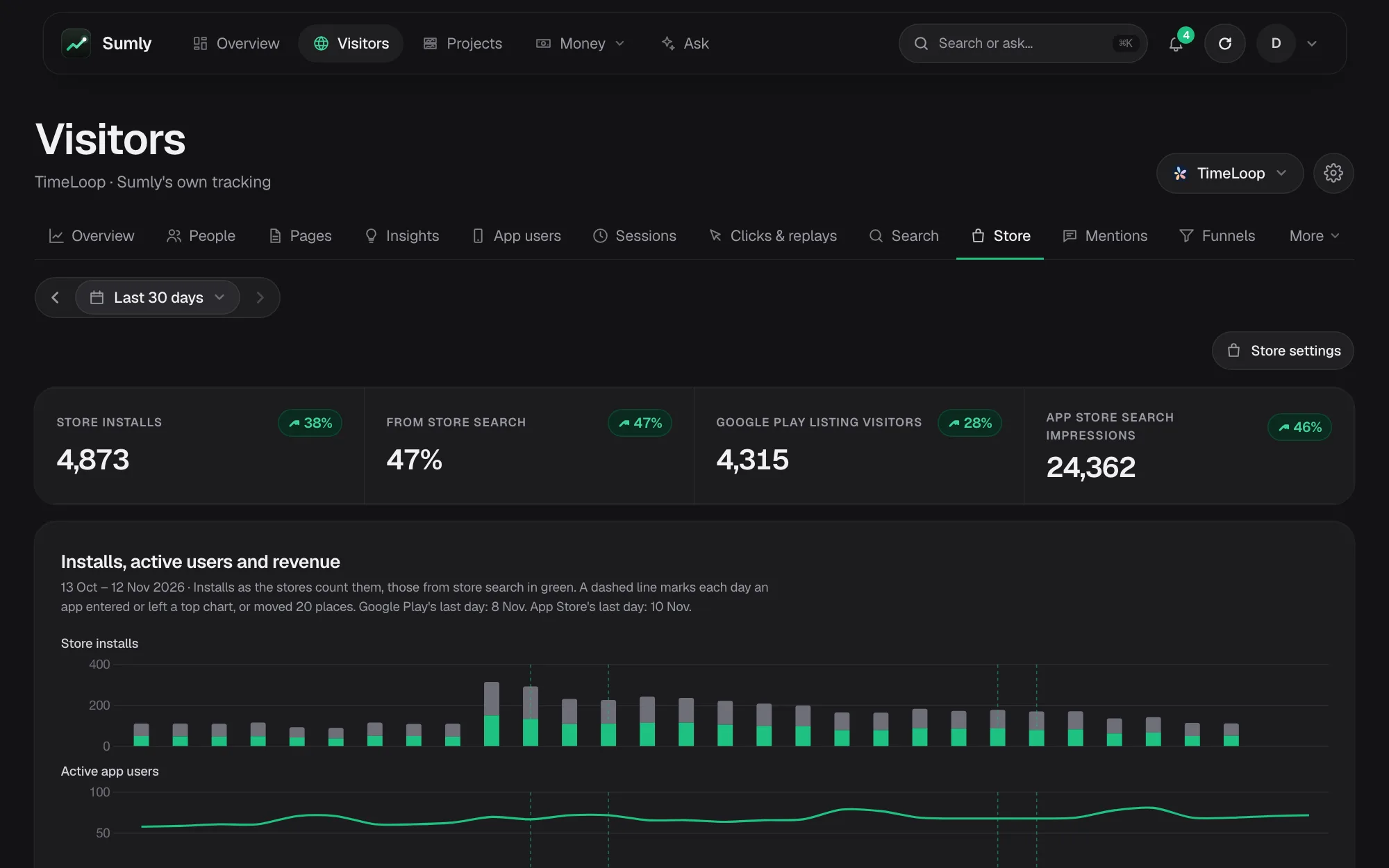
What the stores say, and where it shows
Google Play searches
The searches that brought people to your store listing and how many of them installed, from Google Play's own export. Google groups rare searches into one row, and Sumly shows that row as it is.
App Store search by country
Impressions, product page views and downloads from App Store search in each country, from Apple's analytics reports. Apple does not name the searches, so neither does Sumly.
Share from store search
How many of your installs came from store search, against the same number of days before.
On the top charts
Each day Sumly checks top free, top paid and top grossing, overall and in your app's category, in the US, the UK, Germany and the countries your app has the most installs and users in.
Marks on your charts
A day your app enters or leaves a top 100 or top 10, or moves 20 places, is marked on the installs, active users and revenue charts.
Told when it happens
The same moves come to the bell and as a push, like a rush of visitors or a bot attack.
What it needs
Store search uses the connections you already have. The charts need nothing but your app.
- Google PlayYour Google Play connection's service account, with View app information and download bulk reports in Play Console. Google adds a day 3 to 7 days later.
- App StoreApp Store payouts (a team key), and one request made by a key with the Admin role, which Sumly does not keep. Apple's first reports come a day or two after it.
- Top chartsPublic. Sumly finds your app from its App Store, Google Play or RevenueCat connection, or from its store link.
- What is keptThe stores' daily counts for your app, and its own place on each chart. Never the rest of a chart.
Questions about store search and charts
Is this keyword research?
No. Sumly shows what the stores say about your own app. It does not suggest keywords, follow rankings for search terms or look at other apps.
Why are the newest days missing?
Google Play adds a day 3 to 7 days later and Apple 1 to 2 days later. The page says which day each store's numbers reach.
Can I see App Store search terms?
No. Apple's reports do not include them. Google Play gives its own.
What if a chart cannot be read?
That chart is shown as unavailable for the day. Sumly never shows an older place as today's.
Goes well with
Try it with your own projects
Sign in with Google or a code by e-mail and connect your first project. The first 14 days of a paid plan are free, with no card.
Start free trialOr look around first: open the live demo.